




£28.16
Experience the vibrant and smooth taste of Wirra Wirra Catapult Shiraz, a premium red wine from Australia's McLaren Vale region. This wine is crafted to be incredibly drinkable and pairs perfectly with a variety of dishes.
- Contains Shiraz grapes sourced from the coastal McLaren Vale region.
- Alcohol content of 14.5% ABV, providing a robust flavour profile.
- Aged in oak barrels to enhance tannin structure and complexity.
- Ideal serving temperature between 15-16°C for optimal enjoyment.
- Produced by the family-owned Wirra Wirra winery, established in 1894.
- £28.16
- £28.16
- Unit price
- per
Shopped From |
M&S
Duties & Customs (You Pay)
Import fees may apply on arrival, and you must pay any customs charges. Prices exclude duties. Learn More: Shipping Policy | Terms and Conditions


Description
xThis product is not for sale to people under the ages: 18 years (UK and EU), 21 years (USA) etc. By placing an order, you confirm that you meet the legal drinking age requirement in your country. To confirm that the recipient meets the legal drinking age to purchase alcohol, a valid photographic ID with his/her date of birth is required prior to delivery. If this identification is not provided, the alcohol will be returned at your expense. See our Shipping Policy and Terms of Service for further information.
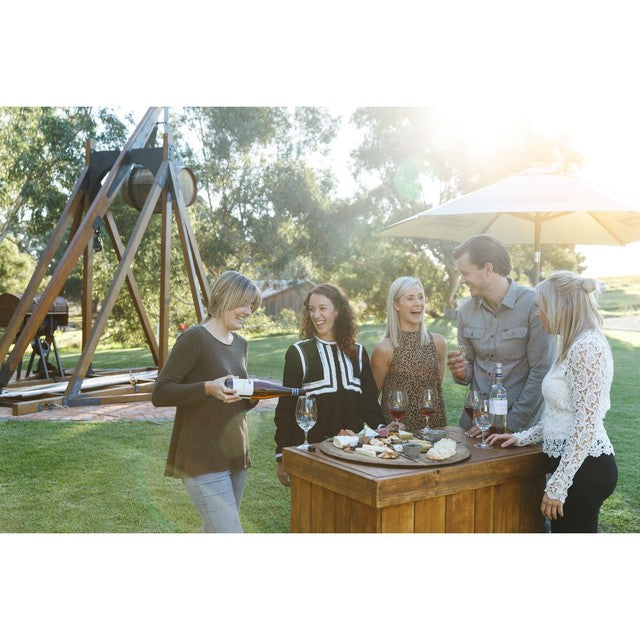
Greg Trott saw many dreams realised at Wirra Wirra. Yet one eluded him - building a medieval siege machine, or trebuchet to use as a catapult; bombing neighbouring wineries with bottles of fine wine. Since his passing we have honoured the dream, crafting a trebuchet and a wine that symbolize his pioneering spirit. A shiraz that is classic McLaren Vale, yet bright and brimful of possibilities. Just like Trott.
Please drink responsibly: The UK Chief Medical Officers recommend adults do not regularly drink more than 14 units per week.
Country of origin: Australia.
Package type: Glass.
Contains Sulphites.
Grape variety: Shiraz.
Current vintage: 2022.
Tasting notes: The Catapult shiraz is bright and bursting with juicy red fruits. Silky smooth with well balanced tannis, this is a delicious and incredibly drinkable McLaren Vale shiraz.
Alcohol by volume: 14.5.
Serving suggestions: Serve between 15 and 16°C, it is ideal wine to match with all types of red meats, fish, and cheese.
Winemaker: Emma Wood, Kelly Wellington and Grace Wang.
Vinification details: Fruit was gently crushed and destemmed en route to fermenter. Early temperatures were maintained at 20-22 degrees, rising to 25-28 degrees at peak of ferment. In general, ferments were pumped over two to four times daily to assist flavour and colour extraction, as well as spreading heat through the cap and body of the ferment. Nearing completion and having achieved the desired flavour and tannin extraction, pump-overs were reduced to once or twice daily to keep the cap moist. Close to dryness, wine was drained from the fermenter and the remaining skins were pressed via tank or basket press. Wines completed their secondary malolactic fermentation in tank then filled to oak with barrel selection and maturation times tailored to each parcel - those showing a more powerful structure receiving a longer maturation time in oak before blending.
